
Since 25 July 2025, all sites that allow pornography need to have highly effective age checks in place for UK users. We have seen steps taken across the adult industry, including the UK’s top ten most popular pornography sites introducing age checks by the deadline. How pornography sites deploy these age checks, including where the check takes place, has varied, which matters for compliance with the Online Safety Act. This blog outlines where we consider to be the safest (and compliant) placement of an age check on pornography sites.
In January and April 2025, Ofcom published guidance on age checks. Since then, we’ve seen pornography services take different approaches on where they position their age checks. In this blog, we refer to the placement of age checks as ‘age gates’ and the below list reflects the four most common types of age gate that we have seen being used across dedicated pornography sites in the UK.
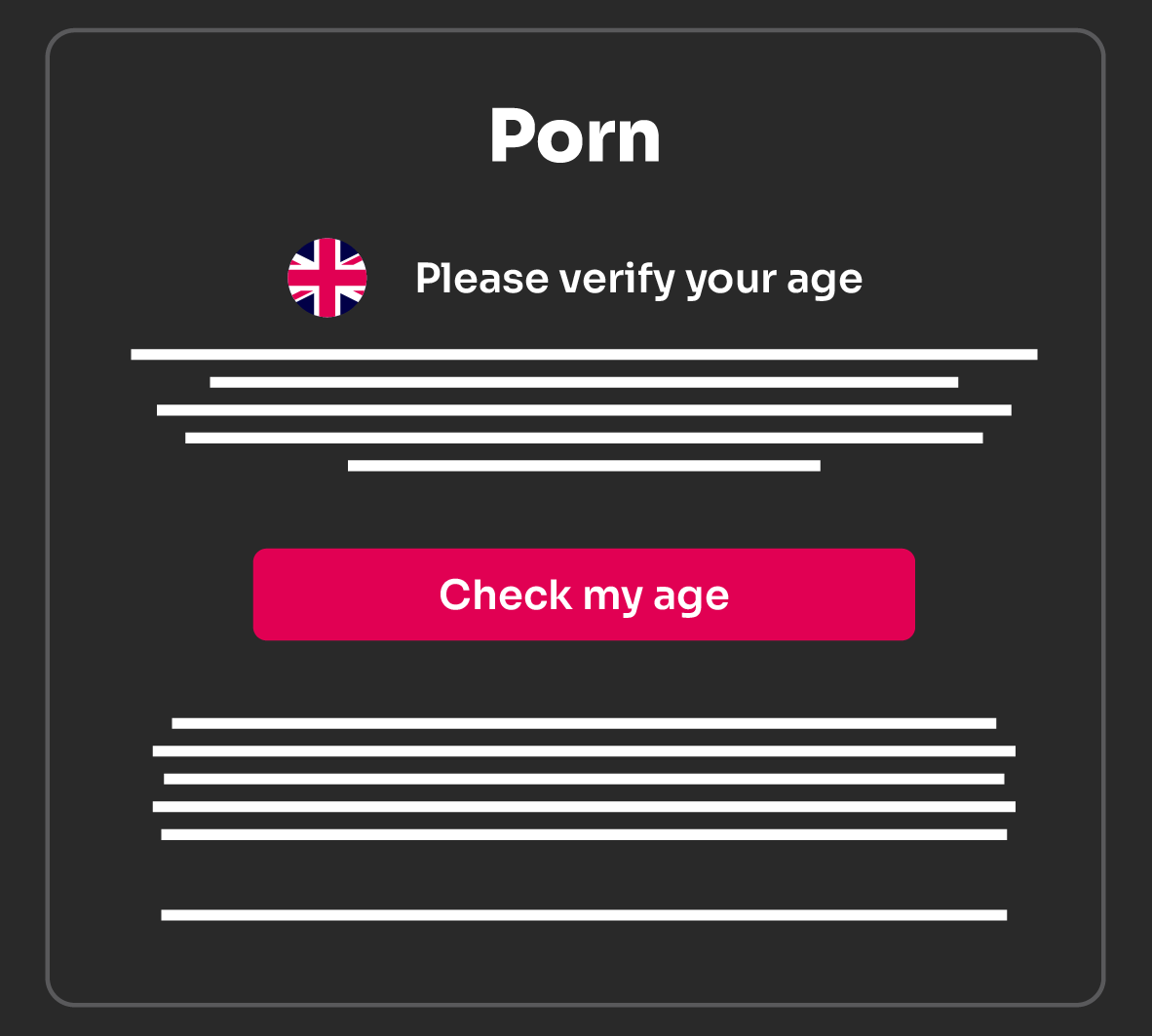
'Front Gate' - A user sees only a blank landing page, with no content visible until they have completed the age check.

'Blur Gate' - A user sees a series of blurred images before the age check. In some cases, titles are visible which could contain strong sexual wording. Clicking on a thumbnail directs users to an age check.

'Image Gate' - A user sees a series of clearly visible images. Often these are of clothed people, sometimes in sexually suggestive poses and/or wearing lingerie. In some cases, titles are visible which could contain strong sexual wording. In some variations, users can see a preview of the video when hovering over with a cursor. Clicking on the thumbnail directs users to an age check.
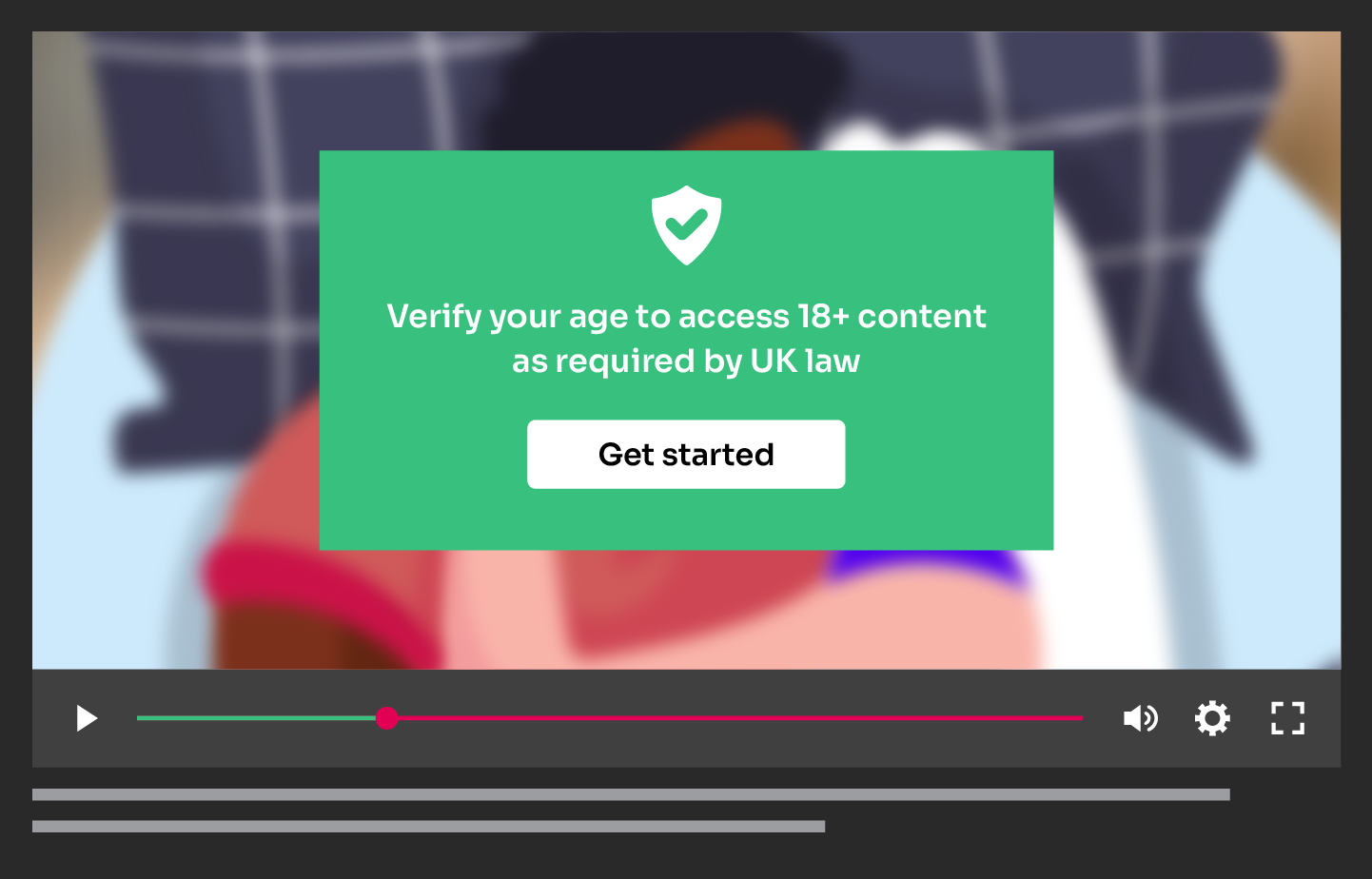
'In-Video Gate' - A user sees a series of thumbnails that contain clearly visible images. Often these are of clothed people, sometimes in sexually suggestive poses and/or wearing lingerie. In some cases, titles are visible which could contain strong sexual wording. Users can sometimes see a preview of the video when hovering over with a cursor. Users can then watch the video up until a certain point, usually up until nudity is shown, after which they are directed to an age check.
Ofcom’s recommended approach for dedicated porn services
Ofcom’s guidance1 allows providers flexibility to choose their age assurance methods, as long as they meet our four criteria (technically accurate, robust, reliable and fair). Our Protection of Children statement also makes clear that for dedicated pornography services 'highly effective age assurance should be implemented either at the point of entry to the service or the provider must ensure that no harmful content is visible to users on entering the service before they have completed the age check'.2 Additionally, in the relevant Codes we set out that the age check for dedicated user-generated pornography services should be at the point of entry. Therefore, if a service uses a ‘front gate’, they would be following the measures in the Codes and be compliant with their duties.
As such, we consider that the safest approach for dedicated pornography services is to implement a ‘front gate’, where users see a blank landing page, with no content visible until they have completed the age check. This applies whether the pornography is user-generated or published by the provider.
Considerations regarding other approaches
It is important to stress that any approaches to age assurance other than a ‘front gate’ will need to ensure children can’t access pornography before the age check.
In line with our guidance, where the content prior to an age gate meets the definition of pornographic content (defined in the Act as content that it is reasonable to assume was produced solely or principally for the purpose of sexual arousal), this would breach the duties in the Act.
If a service opts to use a ‘blur gate’, the blurring needs to be sufficiently strong and across enough content to ensure that the content is not pornographic.
If services use an ‘image gate’ they must make sure that every image or preview video available before the check is not pornographic, taking into account relevant context including titles or captions.
Services using an ‘in-video gate’ would need to make sure the video content available before the check is not pornographic. Placing an age-gate in the middle of a video which, as a whole, has the principal purpose of sexual arousal does not necessarily mean that the content shown before the age check isn’t pornographic, even if it doesn’t show nudity or sexually explicit acts. For this reason, in-video gates may create more risk than the other approaches we have seen.
When deciding what content is suitable to include before an age gate, services should refer to our guidance on pornographic content, considering the wider context of their site and whether the images or videos are accompanied by sexually explicit language in titles, for example. Services should also note that content does not necessarily have to include nudity or depictions of sexually explicit acts to be pornographic. What matters is whether it is reasonable to assume the content was produced principally for the purpose of sexual arousal. Services should review our guidance, which includes two tables that set out non-exhaustive descriptions and examples of pornographic content that is harmful to children, as well as examples of content that is not considered pornographic.
Our next steps
Building on the significant change we have seen in 2025, we will continue to engage with and monitor the adult sector to identify and address non-compliance, including whether services’ placement of the age check is compliant.
Ofcom will publish a report on age assurance by July 2026, which will look at how services, including dedicated pornography services, have used age assurance to comply with their duties in the Act, how effective this has been, and whether factors have prevented or hindered the effective use of age assurance for that purpose.