

With the FIFA World Cup 2026 just days away, fans across the world are finalising their viewing plans for the 104 matches set to be played out in this year’s tournament.
But with the USA, Canada and Mexico as host nations, the schedule means some pretty tricky timings for viewers based in the UK – with some matches kicking off as late as 3am and as early as 5am UK time.
This means supporters on this side of the Atlantic are thinking about the different ways to keep an eye – and an ear – on the goals, the bore draws, and the controversial VAR decisions.
Fortunately, there’s now a wealth of viewing and listening options available; from radio to TV to streaming. But the key question is – what’s the method with the shortest delays? How can you hear about the on-pitch events before you hear your next-door neighbour celebrating (or booing), or before you receive a message from a friend or a goal alert on your phone?
Given the different technologies involved in these platforms, some of them are more immediate than others – and some have slight delays. For example, when streaming, the content has to be packaged for transmission across the internet, and a moderate amount of buffering must be included, to make sure the receiver has collected enough data so it can play out the audio and video continuously once it’s started.
There are also delays in the TV and radio production processes, and in coding the signals to send to the receivers used in different platforms. The actual delay can vary by a significant amount, depending on the platform.
Here, we’ve listed the most popular methods in order of the shortest delays. Maybe this will help you decide how to follow the games?
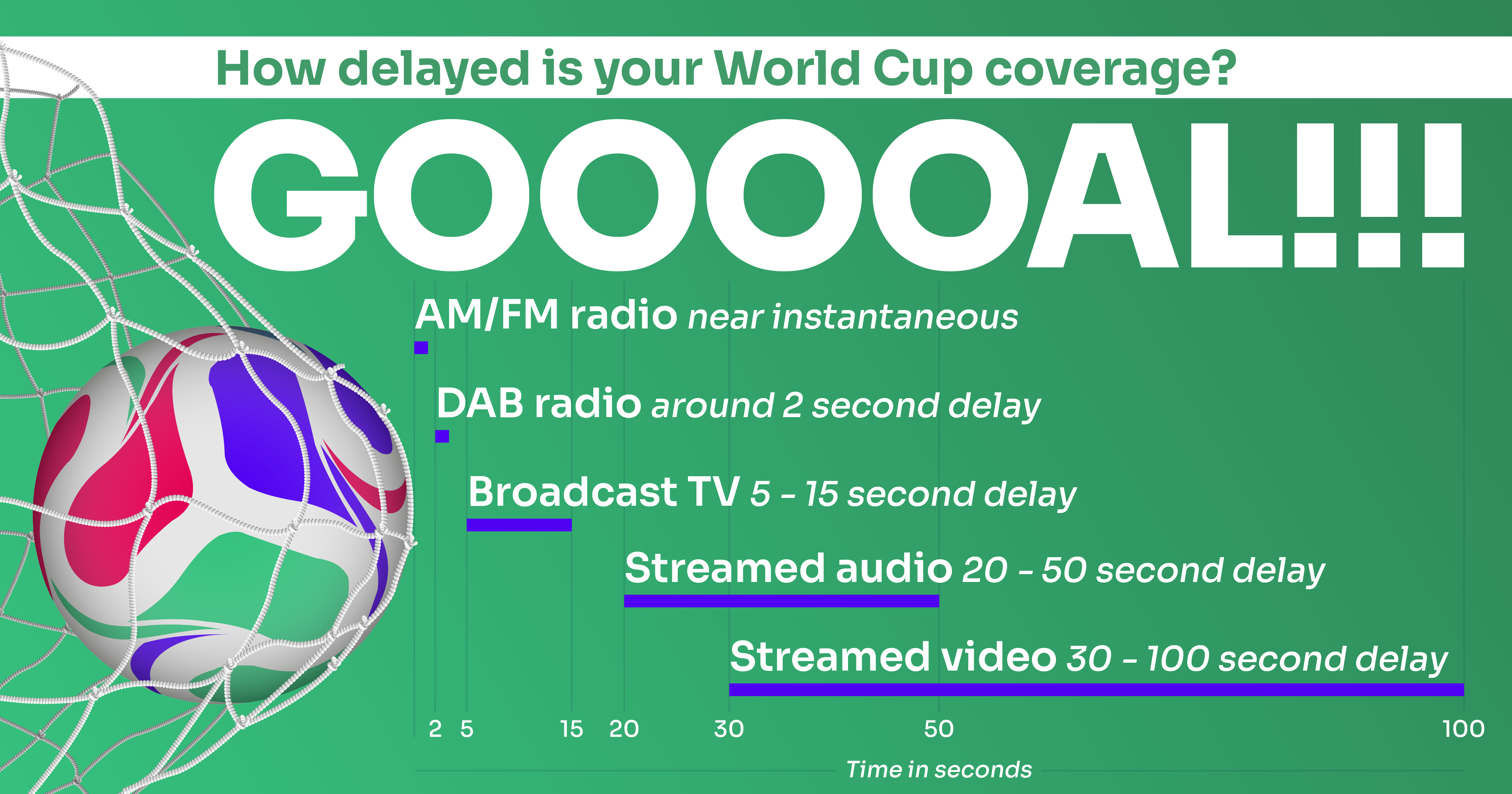
- AM/FM radio is near instantaneous, with no noticeable delay.
- DAB (digital) radio has a delay of around two seconds.
- Broadcast TV, regardless of whether it’s terrestrial, satellite or cable, means a delay of between five and 20 seconds.
- Streamed audio has a delay of between 20 and 50 seconds.
- And streamed video, such as iPlayer or ITVX, could involve a delay of between 30 and 100 seconds.
So, the best option for fans hoping to avoid the delays? Go old-school; because it looks like radio is your friend. With either no delays, or very short ones, either AM/FM or digital radio offer the fastest way to follow the action.
And of course, if you really want to avoid any spoilers, remember to turn off your phone or at least put it on airplane mode...
Related content